Alright, let's talk EIFS. I get a lot of questions from folks around Chandler about Exterior Insulation and Finish Systems, or EIFS for short. There's a ton of old information out there, and frankly, some contractors just don't explain it well. So, I figured I'd tackle the most common questions I hear directly. No marketing fluff, just what you need to know.
What exactly is EIFS, and how's it different from traditional stucco?
Okay, so traditional stucco is basically a mix of cement, sand, lime, and water. We apply it in layers over a wire lath. It's hard, durable, and breathes pretty well. EIFS is a whole different animal, though. Think of it as a multi-layered system that includes insulation. You've got a water-resistive barrier, then an insulation board (usually expanded polystyrene, EPS), a base coat with a fiberglass mesh embedded in it for strength, and finally, a finish coat that gives it color and texture. The biggest difference? EIFS has that insulation layer. That makes it much better at keeping your home cool in our brutal Chandler summers and warmer in the few cold snaps we get.
Is EIFS still prone to water damage like I've heard?
This is probably the biggest concern I hear, and it's a fair one. The early versions of EIFS, back in the 80s and early 90s, did have some serious water intrusion issues. That's because installers often skipped a proper drainage system behind them. Water would get in through cracks or around windows and doors, get trapped, and cause rot in the sheathing. It was a mess, no doubt. But modern EIFS, what we call 'drainage EIFS' or 'barrier EIFS with drainage,' has fixed that. It includes a drainage plane and weep holes to let any trapped moisture escape. When experienced pros like us at Apex Stucco install it correctly, with proper flashing and sealants, it's a very reliable system. You just can't cut corners on the installation.
How long does EIFS last, and what kind of maintenance does it need?
With proper installation and decent maintenance, EIFS can easily last 30-50 years, often longer. It's a tough system. As for maintenance, it's pretty straightforward. You'll want to:
- Keep it clean. A gentle power wash (low pressure!) or just a hose and soft brush once a year can remove dirt, dust, and any mildew that might try to grow in our humid monsoon season.
- Inspect it regularly. Walk around your house every year or so. Look for cracks, especially around windows, doors, and corners. Check for any areas where the sealant might be failing.
- Repair small issues quickly. If you see a small crack, get it fixed. Don't let it become a bigger problem where water can get in.
It's generally less maintenance than, say, wood siding, which needs repainting every few years.
Can EIFS really save me money on my energy bills in Chandler?
Absolutely, that's one of its main selling points, especially here in Arizona. The insulation board in EIFS significantly improves your home's thermal performance. It creates a continuous layer of insulation on the outside of your walls, reducing thermal bridging (where heat can escape or enter through studs). This means your AC unit won't have to work as hard to keep your house cool when it's 115 degrees outside. We've seen homeowners report noticeable drops in their energy bills after switching to EIFS. It's a smart investment for energy efficiency, wouldn't you say?
What kind of look or finish can I get with EIFS?
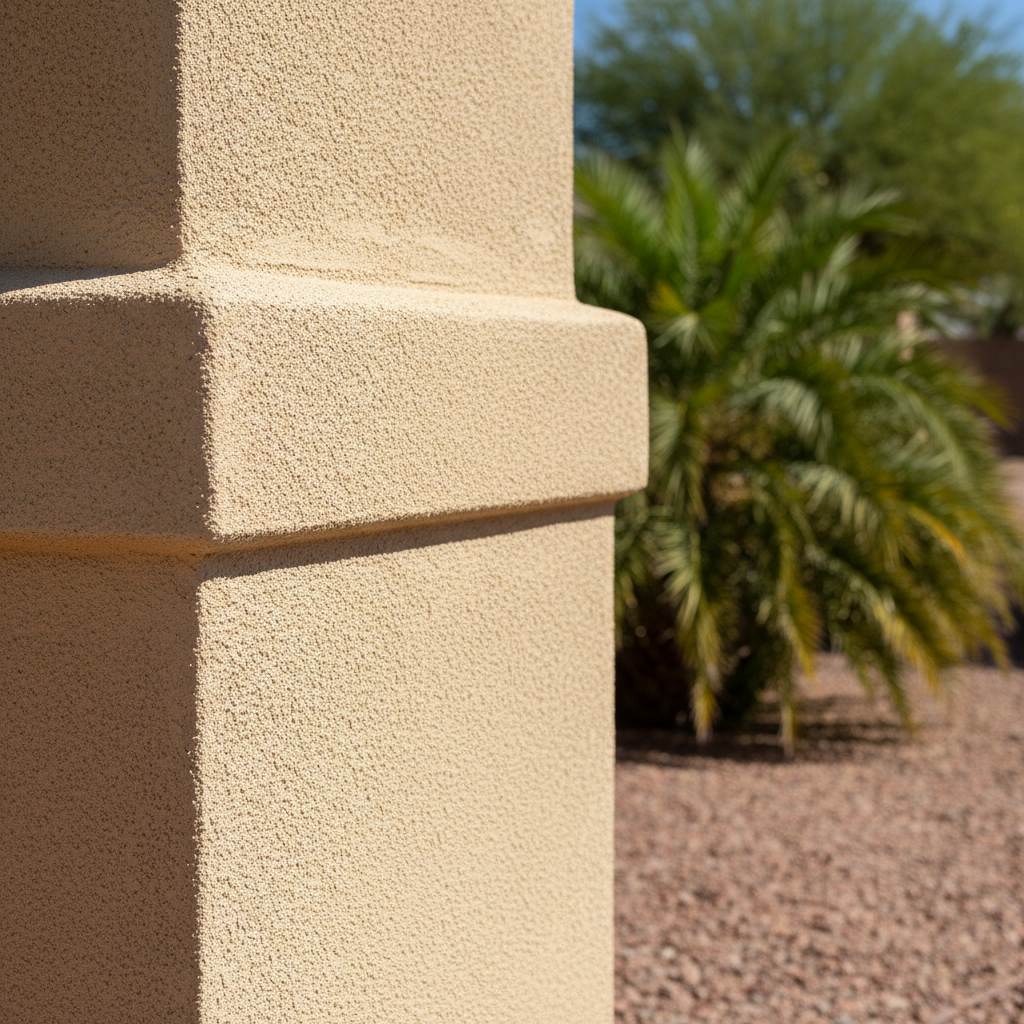
This is where EIFS really shines in terms of aesthetics. You've got incredible design flexibility. Unlike traditional stucco, which is pretty limited in texture, EIFS can mimic almost any finish you can imagine. We're talking smooth, sand, coarse, even brick or stone. You can get virtually any color you want, and because the color is integrated into the finish coat, it resists fading really well. You can also create architectural details like cornices, columns, and special trim that would be much harder, or even impossible, with traditional stucco. It really lets you customize the look of your home.
Is EIFS more expensive than traditional stucco?
Upfront, yes, EIFS typically costs more per square foot to install than traditional stucco. There are more components, and the installation process is a bit more intricate, requiring specialized training. However, you've got to look at the long game. When you factor in the energy savings over the system's lifespan, the reduced maintenance, and the superior durability, that initial cost difference often evens out or even comes out ahead. Plus, the enhanced curb appeal and insulation value can add to your home's resale value. It's an investment, not just an expense.
Hopefully, that clears up some of the common questions you might have about EIFS. If you're in Chandler and thinking about it for your home, give us a call. We're happy to walk you through the specifics for your property.